Easy Ways to Manage Restaurant Tables and Bookings with DineGlobe

October 23, 2026 · 27 reads
Introduction
Managing Restaurant Tables and Daily Reservations
Running a busy restaurant is exciting. Every night brings new guests, fresh food, and full tables. But managing bookings on paper can cause huge problems. Lost notes, overbooked tables, and double bookings ruin meals fast.
Guests want smooth seating when they arrive. Staff need clear details to prepare tables on time. Simple software helps hosts manage bookings without stress or errors.
Using Restaurant Reservation Software helps your team track every guest booking easily. It shows open tables, party sizes, and reservation times clearly.
Software removes guesswork at the front desk. Your host stand runs smoother during busy dinner rushes.
DineGlobe offers tools that help restaurants manage table bookings every day. Good software keeps your team calm and your guests happy.
This guide covers everything about reservation tools and table planning. You will learn how modern systems help your restaurant run better.
Understanding Restaurant Reservation Software
Managing bookings by hand takes a lot of time. Writing names in a paper book creates mistakes during busy hours. Staff might misread handwriting or forget to write down special requests.
Software solves these daily operational problems instantly. A digital booking tool saves guest names, phone numbers, and arrival times automatically.
Staff can check booking details with a single tap on screen. If a guest calls to change their time, staff update it quickly.
Imagine six guests calling for dinner at seven o’clock on Friday. Paper notes can lead to double booking the same table. Software alerts staff instantly when a time slot is full.
Different platforms offer various features for daily hospitality workflows. You should choose software that fits your specific daily setup.
Using modern tools improves guest service across your entire restaurant layout. Hosts welcome guests faster because all reservation details stay organized.
Online Restaurant Booking System and Direct Reservations
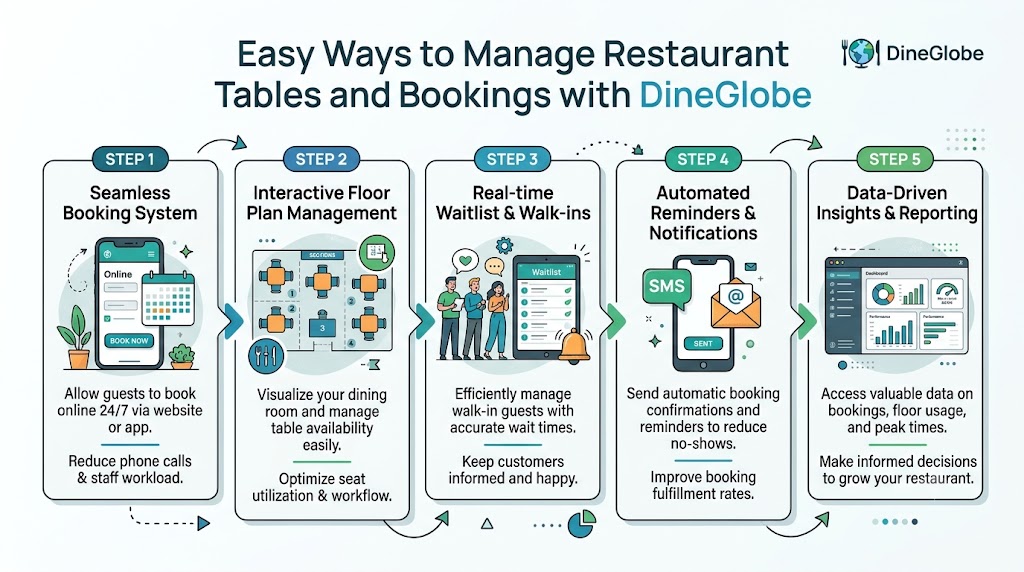
Guests love booking tables from their phones or computers at any hour. An Online Restaurant Booking System lets customers request tables whenever they want.
Online tools show open time slots based on real table availability. Guests pick their preferred time, enter party details, and send requests instantly.
Automated messages confirm bookings right away so guests feel confident. Systems can also send friendly SMS reminders before dinner time.
Reminders help cut down on costly guest no-shows significantly. When plans change, guests can cancel early through simple digital forms.
A Direct Restaurant Booking System connects guests straight to your main website. Direct bookings build stronger relationships because you manage the guest experience directly.
You collect guest preferences, like allergy notes or anniversary celebrations, easily. Clear booking policies explain deposit rules or cancellation windows upfront clearly.
Easy reservation forms make booking simple for guests of all ages. Simple forms mean more completed bookings for your restaurant every week.
Comparing Manual Booking and Digital Software
The table below compares paper reservation books with modern digital reservation software.
| Task or Feature | Manual Paper Book | Digital Software System |
| Recording Bookings | Slow hand-written notes | Fast digital entries |
| Checking Availability | Manual page turning | Instant screen view |
| Updating Changes | Cross-out marks and erased notes | Clean digital edits |
| Guest Reminders | Manual phone calls needed | Automatic text messages |
| Double Booking Risk | Very high during rush hours | Very low due to system alerts |
Digital systems reduce front desk errors and save staff time daily. Clear table views help hosts make fast seating decisions without guessing.
Restaurant Table Management Software
Keeping track of open tables during peak hours can get messy. Restaurant Table Management Software helps staff see table availability across all dining areas.
Software displays table capacities, current guest assignments, and seating status clearly. Staff see which tables are active, paying bills, or ready for cleaning.
Good table planning helps front-of-house staff coordinate smooth guest seating. Hosts know exactly where to seat a party of four next.
Consider a busy dining room with twenty tables on a Saturday night. Without digital tools, hosts walk around guessing which tables will finish soon.
With visual table tracking, hosts see remaining meal times clearly. Staff clean dirty tables faster so waiting guests sit down sooner.
Smart seating tools prevent server overload by balancing guest count across sections. Servers deliver better service when table assignments stay fair and balanced.
Restaurant Waitlist Management Software
Walk-in guests often arrive when every table is completely full. Restaurant Waitlist Management Software helps staff handle long waiting lines smoothly.
Hosts add waiting guests to digital lists with names and party sizes. Systems estimate wait times based on live table turnover rates automatically.
Staff can text guests when their assigned table becomes fully ready. Guests walk around nearby shop areas instead of crowding your entrance hall.
Clear waitlist steps reduce guest confusion in busy host stand areas. Guests appreciate regular text updates about their current waiting status clearly.
Wait times always depend on table availability, guest flow, and daily service speed. Software provides structure, but staff judgment keeps service flowing smoothly always.
Organized waitlists make long wait times feel much shorter for hungry diners. Your entrance stays clear, safe, and organized during busy weekend shifts.
Restaurant Floor Plan Software and Host Stand Tools
Visual maps make table seating much easier for new staff members. Restaurant Floor Plan Software creates visual layouts of your whole dining space.
Layouts show dining rooms, patio seating, bar areas, and private rooms clearly. Color indicators highlight free tables, reserved spots, and dirty tables instantly.
Visual maps help hosts place big parties near each other without trouble. Staff spot empty tables instantly during hectic dinner service hours.
Restaurant Host Stand Software centralizes reservation lists, guest arrivals, and floor layouts together. The host stand touchscreen becomes your main operational control center every shift.
Hosts view guest reservation records right next to active table maps. Smooth communication between hosts and servers speeds up total table setup times.
Special software features vary across different restaurant technology platforms. Always check specific product details to match your daily operational needs.
Restaurant Reservation Software for Small Restaurants
Small cafes and bistros have unique daily needs and tight budgets. Restaurant Reservation Software for Small Restaurants focuses on simple, helpful tools.
Small venue operators need software that sets up quickly without complex hardware. Staff training should take only a few minutes, not several days.
Owners must evaluate daily booking volume before choosing software products. A small bistro with ten tables needs fewer features than big venues.
Pick key tools like basic booking, guest lists, and simple SMS reminders. Avoid paying extra money for complex tools your team will never use.
Always test the complete guest booking process on mobile phones first. A fast booking step encourages local guests to visit your venue often.
Flexible pricing plans help small restaurants grow without high upfront costs. Software should simplify daily tasks so staff focus on great hospitality.
Free Restaurant Reservation System and Pricing Considerations
Many software providers offer starter options or free trial periods today. A Free Restaurant Reservation System might offer basic booking tools for small venues.
Before picking free software, check for hidden operational limits carefully. Free options often limit monthly booking counts, user accounts, or support access.
Some free plans restrict access to guest contact details or system reports. You might need paid upgrades as your restaurant receives more bookings monthly.
Understand the difference between free plans, free trials, and paid packages. A free trial ends after two weeks, while free plans last longer.
Look at full long-term software costs instead of focusing only on price tags. Factor in setup fees, SMS text costs, and hardware needs upfront.
Choosing software based on reliability saves time and prevents future technical headaches. Reliable systems keep your front desk running smoothly without sudden crashes.
Key Features to Review in Software Plans
This table outlines important features to evaluate when comparing restaurant plans.
| Feature Area | Basic / Free Plans | Advanced Paid Plans |
| Monthly Bookings | Limited numbers allowed | Unlimited monthly bookings |
| Guest SMS Reminders | Manual or limited texts | Automated text messaging |
| Floor Plan Customization | Standard basic layouts | Fully customizable visual maps |
| Customer Support | Email support only | Live phone and chat support |
| Data & Reporting | Basic summary reports | Advanced guest analytics |
Reviewing plan features carefully helps you select options that fit your operational budget best.
Restaurant Walk-In Management Software
Not every guest plans their dinner hours or days in advance. Restaurant Walk-In Management Software tracks guests who arrive without prior reservations.
Hosts record walk-in party sizes, arrival times, and special seating needs quickly. The software blends walk-in entries directly into your existing reservation schedule.
Balancing reserved tables with walk-in guests keeps dining rooms full all night. Software alerts hosts when a table must remain open for upcoming reservations.
Imagine a walk-in party of two arriving at six o’clock sharp. The host checks the screen and sees a reservation at seven-thirty.
The host seats the walk-in party safely, knowing the timing works out. Smart scheduling maximizes seat usage while honoring every booked guest reservation on time.
Software provides clear table data, but friendly staff deliver warm guest hospitality. Human care combined with organized software creates excellent dining experiences every day.
How to Choose the Right Restaurant Booking System
Choosing table software requires careful planning from the whole management team. Follow these practical steps to find software that fits your daily workflow best.
- Identify Main Booking Problems: List current pain points, like lost paper notes or double bookings.
- Estimate Daily Guest Volume: Count average daily reservations and walk-in guests clearly.
- List Essential Features: Decide if you need floor maps, SMS alerts, or online booking.
- Compare Plan Costs: Check monthly fees, text messaging costs, and hardware setup costs.
- Test Platform Ease of Use: Run demo tests on tablet devices and smartphones carefully.
- Check Staff Training Needs: Pick user-friendly designs that line staff learn quickly.
- Review Customer Support Access: Ensure help is available during busy weekend dinner service.
- Test the Guest Booking Steps: Make sure booking a table feels quick and fast online.
Taking time to compare platforms prevents buying software with unnecessary complex tools. The right choice supports your daily operations and simplifies guest management.
How DineGlobe Fits Into Restaurant Management
DineGlobe designs technology built for hospitality teams and restaurant operations. Understanding how DineGlobe aligns with daily tasks helps owners make informed decisions.
For restaurant owners, organized reservation handling keeps front-desk staff moving efficiently. Clear booking views allow hosts to focus on welcoming guests warm-hearted.
DineGlobe fits into daily workflows by centralizing guest management tools together cleanly. Front-of-house staff check active bookings, manage walk-ins, and update table statuses easily.
Restaurant technology should adapt smoothly to your existing floor layout and setup. Reliable tools help hosts handle busy weekend shifts without feeling overwhelmed or rushed.
When reviewing DineGlobe, verify specific feature sets, pricing tiers, and available integrations. Match official platform details against your venue’s unique daily operational requirements directly.
Software provides structural support, but great hospitality comes from your dedicated staff. Choosing practical, easy-to-use tools helps your entire restaurant team perform their best.
Frequently Asked Questions About DineGlobe and Restaurant Software
What is restaurant reservation software?
It is a digital tool that records guest bookings, manages table availability, and organizes front-desk operations easily.
How does an online restaurant booking system work?
It displays available time slots on websites or apps, letting guests book tables digitally at any hour.
What does restaurant table management software do?
It displays active dining room layouts, tracks table statuses, and helps hosts assign guest seating efficiently.
How can waitlist management software help restaurants?
It tracks waiting walk-in guests, estimates waiting times, and sends text alerts when tables become ready.
What is restaurant floor plan software?
It creates visual maps of dining areas, showing open, reserved, and occupied tables clearly for staff.
What should small restaurants look for in booking software?
Small venues should focus on low costs, easy staff setup, simple booking forms, and basic text reminders.
Is a free restaurant reservation system suitable for every restaurant?
Free systems suit small venues with low booking volumes, but growing restaurants often need paid features.
How does restaurant walk-in management software work?
It records unannounced guest arrivals, tracks party sizes, and places walk-ins into open table slots safely.
What should restaurant owners check before choosing host stand software?
Owners should check screen ease of use, hardware compatibility, device portability, and reliable evening customer support.
What should readers verify about DineGlobe before selecting a solution?
Readers should review official feature lists, current pricing plans, supported hardware, and software capabilities directly.
Final Thoughts
Managing restaurant tables smoothly requires good organization, clear communication, and simple systems. Modern reservation software eliminates paper mess, reduces double bookings, and speeds up host stand work.
Digital booking options allow guests to reserve tables quickly from home or mobile phones. Table layouts, waitlists, and walk-in tools keep dining rooms full and hosts calm during busy rushes.
When choosing software, select options that fit your restaurant size, staff skill, and budget. Review plan limits, hidden setup costs, and customer support access before committing long-term.
DineGlobe offers tools designed to streamline daily front-of-house management and guest bookings. Equipping your hospitality team with user-friendly software creates great dining experiences for every guest.
Leave a Reply